Immediate client experience
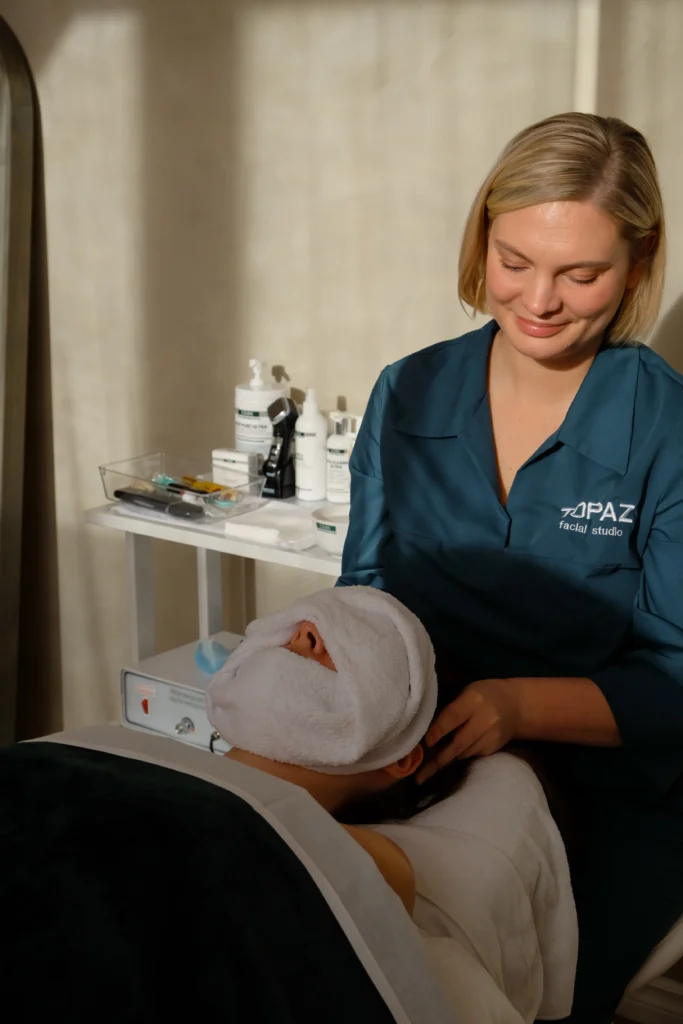
Techniques may help reduce the appearance of puffiness, support more defined contours, and create a temporarily more rested, sculpted look.

TOPAZ PROFESSIONAL TRAINING
Learn a structured, hands-on approach to myofascial face massage designed for estheticians and professionals who already work with the face.
COURSE BENEFITS
Techniques that do not require devices or injections.
A deeper understanding of fascia and why we do each step.
Structured for professionals who already work with face, body, and for therapists just getting into the industry.
Online, self-paced learning that fits your current practice.
WHO IT IS FOR
This training is intended for estheticians, facialists, massage professionals who work with the face or body, and therapists entering the industry or adding a structured face-massage service.
Ask About TrainingEXPECTED OUTCOMES
Techniques may help reduce the appearance of puffiness, support more defined contours, and create a temporarily more rested, sculpted look.
Consistent treatment can help support tissue mobility, circulation, facial balance, and the appearance of age-related concerns. Results vary.
Individual client outcomes vary according to technique, treatment plan and individual factors.

YOUR INSTRUCTOR
Anna is the founder of Topaz Facial Studio in Vancouver, an active client practitioner and educator working in esthetics since 2013. In 2025, she was a finalist at The Skin Games in Face Massage and Pigmentation.
Her teaching is grounded in daily treatment work, clear sequencing, and helping professionals understand why each technique matters—not simply how to copy a movement.
Meet AnnaFIVE MODULES
Begin with breathing and connected tissue preparation, then move through the upper body and into precise lower- and upper-face techniques.
Use diaphragmatic breathing as the foundation of myofascial face massage, with attention to breath mechanics, diaphragm awareness, fascial tension, and lymphatic flow.
Preparing breathing and the body’s main lymphatic pathways can support fluid movement and help ready the system for more effective facial release work.
Apply massage techniques across the décolleté, chest, shoulders, and neck to address fascial restrictions and muscular tension in areas that influence the face.
Releasing connected areas can support posture, tissue mobility, lymphatic flow, and a less restricted foundation for facial work.
Combine targeted upper-back techniques with therapeutic scalp work while studying the relationship between the upper body, neck, scalp, and facial fascia.
This whole-body approach can help ease head and neck tension and support circulation to the face.
Work with the lower face, including the zygomaticus muscles, masseter, and surrounding connective tissue through structured myofascial techniques.
Lower-face release can help address jaw tension, puffiness, and restricted mobility while supporting more defined facial contours.
Target the forehead, brow area, and surrounding muscles and fascia with upper-face massage techniques.
Releasing chronic tension can support circulation, tissue elasticity, and a more open, relaxed appearance through the upper face.
COURSE INVESTMENT
Online access to five structured modules, learned at your own pace, with a certificate of completion.
ILLUSTRATIVE PRICING EXAMPLE
$399 ÷ $50 = approximately 8 sessions
If a practitioner chooses to increase a suitable service by $50, about eight sessions would equal the course price.
Actual pricing, demand and return on investment vary by practitioner and market.COURSE FAQ
Clear answers about course structure, practical integration, and professional confidence.
Ask a QuestionA certificate of completion is provided after training.
Yes. The course is designed so you understand how tissues respond and why, rather than simply copying movements from a video. Many practitioners begin carefully integrating elements while they are still training.
The focus is a clear system for consistent work across different clients. It is a methodology adapted for real-world practice rather than a demonstration on one ideal model.
The course was created by a practicing specialist who works with clients regularly and applies this methodology in real treatments.
Yes. The program progresses from preparation and tissue understanding through technique and practical integration, helping you see the complete system.
The online format lets you learn at your own pace. Many professionals begin gently incorporating elements after the first modules and build gradually as confidence develops.
The training is designed to strengthen visible treatment results, help you explain the value of your work, and support thoughtful pricing decisions. Actual return varies by practitioner and market.
Confidence is a core goal. Understanding what is happening in the tissues and why a result appears can replace guesswork with calmer, more deliberate treatment decisions.
Yes. The training is designed to deepen your understanding of tissue work and integrate with your current practice, not replace your existing approach.
YOUR NEXT STEP
Ask a question before you begin and find out whether the course fits your practice.